
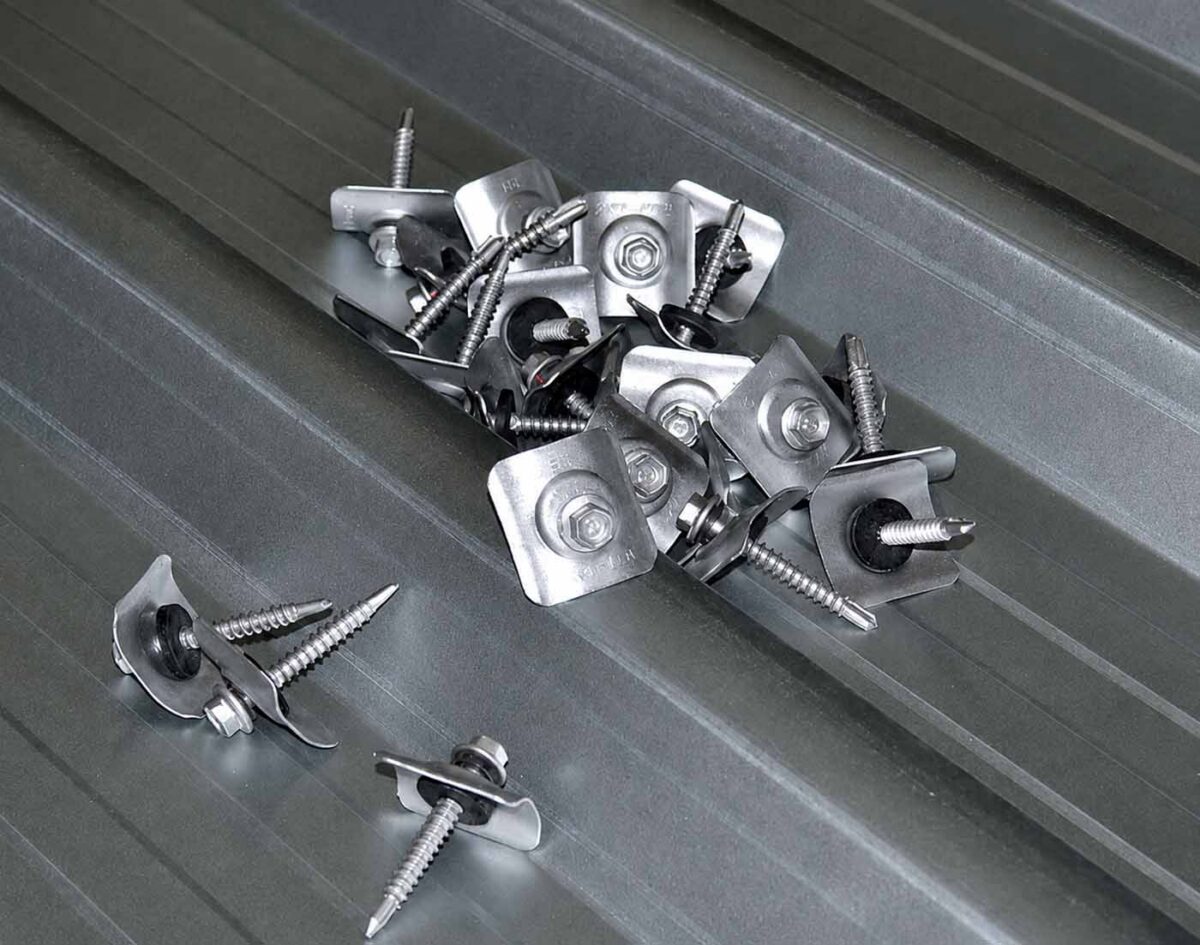
Most homeowners look at the roof sheets first. That makes sense. The corrugate profile, colour, and overall condition are the most visible parts of the roof. But some of the most important parts of a long run corrugate roof are much smaller: the fasteners and washers.
These small components hold the roofing sheets in place, help seal fixing points, and protect the home from wind and rain. When they are installed correctly, they quietly do their job for years. When they fail, a roof can start leaking even if the metal sheets still look reasonable from the ground.
We specialise in long run corrugate roof replacements, so we pay close attention to fasteners, washers, fixing patterns, and the condition of the full roof system. They are small details, but they have a big impact on roof performance.
What Fasteners And Washers Do
On a corrugated long run roof, fasteners secure the metal sheets to the roof framing. The washer sits beneath the screw head and compresses against the sheet to help create a weather resistant seal.
That seal matters because every screw is a penetration through the metal sheet. If the washer fails, the screw loosens, or the fixing is placed incorrectly, water can work its way through.
A strong long run roofing system is not only about good sheets. It relies on the right fixings being used in the right places, tightened correctly, and suited to the environment.
Why Washers Fail Over Time
Washers are exposed to sun, rain, heat, wind, and movement. Over time, they can harden, crack, flatten, or pull away from the roof surface. Once that happens, water can enter around the screw.
Common causes include:
- Age and UV exposure
- Over tightened screws crushing the washer
- Under tightened screws leaving gaps
- Movement from wind and temperature changes
- Corrosion around the screw head
- Poor quality fixings
- Salt exposure in coastal areas
When one washer fails, others nearby may be close behind. That is why a single leak around a screw can be a warning sign of a wider roof issue.
How Incorrect Fixing Can Cause Leaks
Fasteners need to be placed correctly according to the roofing profile and manufacturer requirements. Poor screw placement can create long term problems.
Common mistakes include:
- Screws driven at the wrong angle
- Fixings placed where water runs heavily
- Screws over tightened until the washer deforms
- Screws under tightened so the washer does not seal
- Incorrect spacing across the roof
- Wrong fastener type for the location
- Mixing incompatible metals
A roof can look tidy at first, but poor fixing work often shows up later as leaks, movement, rust staining, or noisy sheets.
Auckland Conditions Make Fixing Quality Important
Auckland roofs deal with a wide range of conditions. Coastal homes face salt air. Inland homes still deal with humidity, heavy rain, and strong UV. Wind driven rain is also common, especially on exposed roof slopes.
In these conditions, fixings must be selected properly. A roof near the coast may need a different fixing specification from a home further inland. If the wrong screws are used, corrosion can appear earlier than expected.
This is a reason we are careful when quoting Auckland reroofing. We consider the home’s location, exposure, roof pitch, and existing condition before recommending the right long run corrugate replacement.
Warning Signs Homeowners Should Look For
You do not need to climb onto your roof to spot every issue. In fact, we do not recommend walking on the roof unless you know what you are doing. From the ground, gutters, or inside the home, you may notice clues.
Look out for:
- Rust marks running down from screw lines
- Loose or raised screw heads
- Missing screw caps where visible
- Water stains on ceilings
- Drips after wind driven rain
- Rattling roof sheets in strong wind
- Damp insulation or musty smells
- Repeated leaks in the same roof section
If you see several of these signs, the issue may not be one failed washer. It may be an ageing roof system.
Why Replacing Screws Alone May Not Solve The Problem
Sometimes homeowners ask whether the roof can simply be re-screwed. In some cases, isolated fixing issues can be handled as maintenance by a repair specialist. However, if the roof is old, corroded, poorly detailed, or the underlay has failed, replacing screws alone may only delay the next problem.
A screw replacement will not fix:
- Widespread sheet corrosion
- Failed underlay
- Poor roof pitch
- Bad flashing design
- Rusted laps
- Rotten timber beneath the roof
- An ageing roof that has reached the end of its life
This is where a full residential roof replacement in Auckland can be the better long term choice. It allows the full roof system to be replaced properly, not only the visible fixings.
Fasteners Matter On New Roofs Too
Fastener quality is not only a concern for old roofs. It matters from day one.
When installing new roofing in Auckland, correct fixing practice helps the roof resist wind, rain, and thermal movement. It also helps protect the manufacturer coating system and reduces the chance of future leak points.
The right installation should consider:
- Correct screw type
- Correct washer type
- Fixing position
- Screw spacing
- Roof pitch
- Sheet length
- Coastal exposure
- Flashing junctions
- Thermal movement
These are not details most homeowners want to manage themselves, but they are details that separate a lasting roof from one that causes issues too early.
How Fasteners Relate To Roof Lifespan
A long run corrugate roof can last for decades, but only when the supporting details are right. Fasteners and washers are part of that longevity.
If they fail early, moisture can enter the roof system. Over time, that can affect underlay, battens, insulation, ceilings, and interior finishes. Small roof penetrations can create big problems if they are ignored.
Our published blog on Metal Roofing Maintenance gives maintenance guidance for metal roofs, including why small signs of wear should be dealt with early.
When Fixing Problems Point To Replacement
A few loose or damaged fasteners do not always mean the roof needs replacing. But if the roof has widespread washer failure, rusted screw lines, recurring leaks, or aged corrugate sheets, replacement may be the smarter decision.
This is especially true when:
- The roof is older
- Several roof areas are affected
- Previous fixes have failed
- The underlay is no longer doing its job
- Corrosion is visible around laps and fixings
- The home is in a coastal or exposed area
In these cases, replacing the roof with a properly installed long run corrugate system can give you a cleaner, safer, and more durable result.
Final Thoughts
Fasteners and washers may be small, but they have a major role in the performance of a long run corrugate roof. They secure the sheets, protect fixing points, and help keep Auckland rain out of your home.
If you are noticing rust marks, loose screws, ceiling stains, or recurring leaks, it is worth getting the roof assessed. The issue might be localised, or it might be the first sign that the roof system is wearing out.
We focus on long run corrugate roof replacements because we know how important the full system is. Sheets, underlay, flashings, fasteners, and fixings all need to work together. When they do, your roof has a far better chance of performing well for decades.
Get in Touch